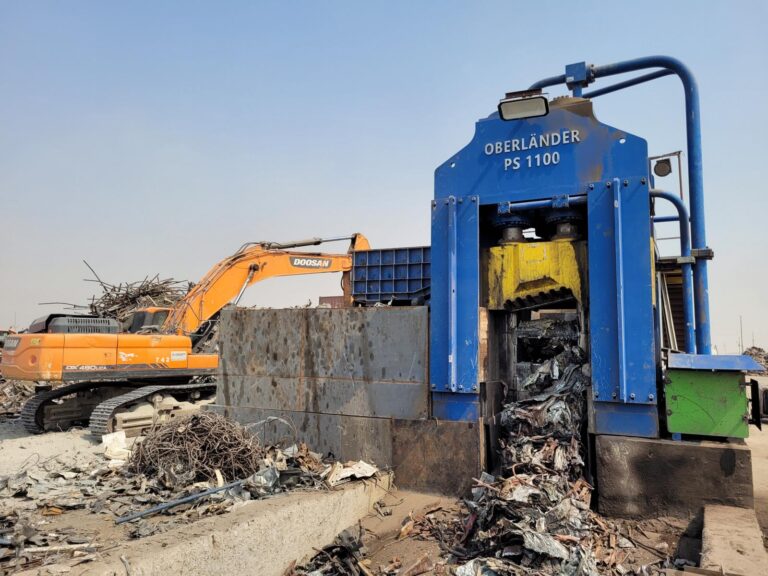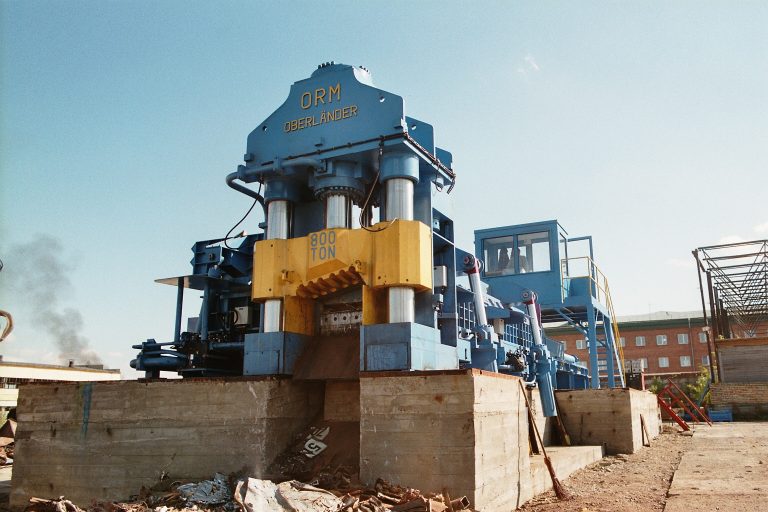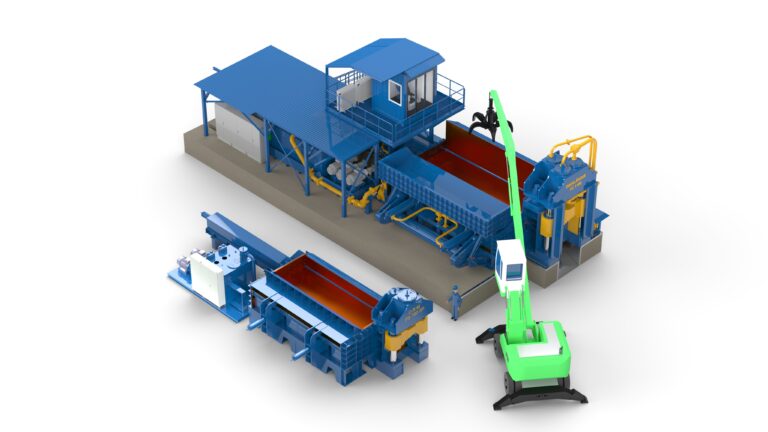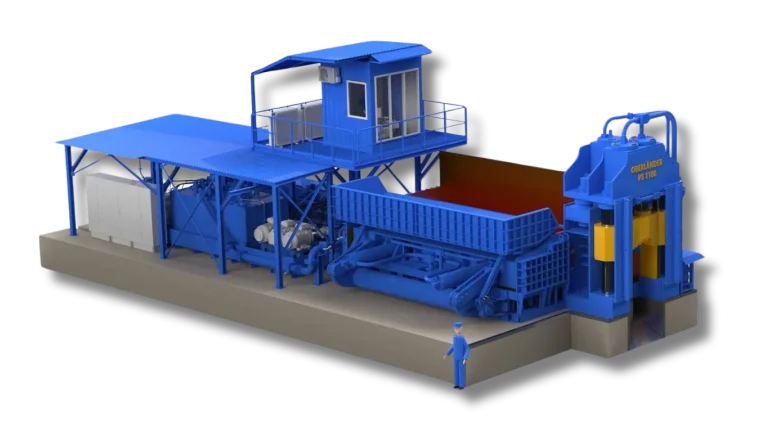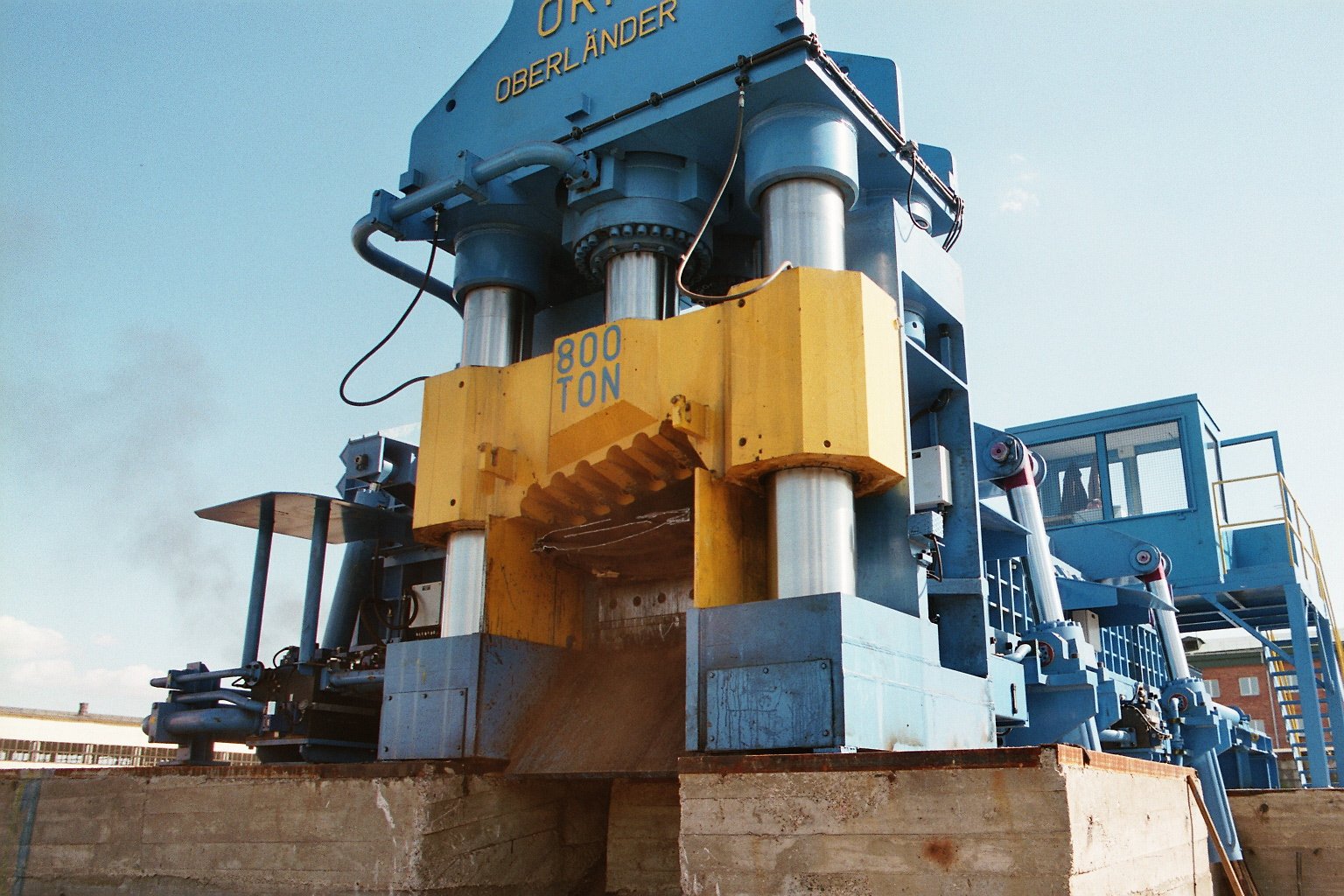
Stationary scrap shears with side compactor have become an integral part of the modern scrap processing and recycling industry. These robust machines play a key role in the efficient compaction and shearing of a wide range of scrap materials, including solid structural steel, rebar bales and heavy mixed scrap. Scrap processing companies, recycling companies and the steel and foundry industries benefit equally from the stationary scrap shears from Oberländer Recycling Maschinen GmbH, which impress with innovative technology, precise cutting power, longevity, high energy efficiency and minimal maintenance.
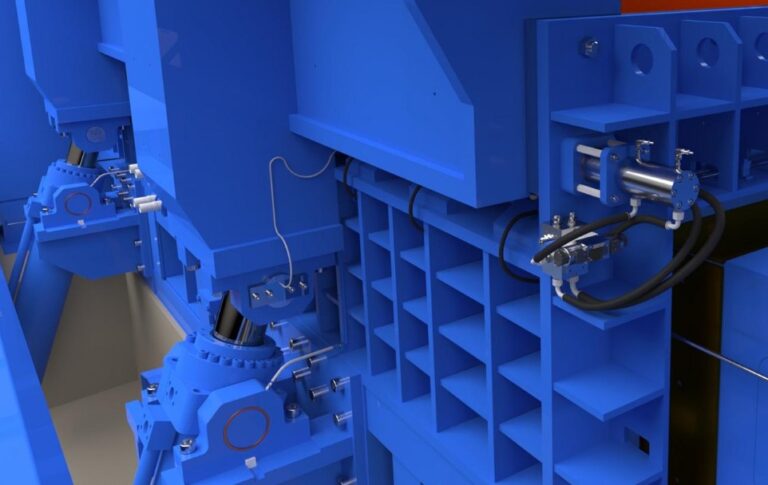
The technology behind stationary scrap shears has evolved over the past few decades. At Oberländer Recycling Maschinen GmbH, the focus is on longevity, reliability, low maintenance and efficiency. The focus is on the column guide of the mobile shear slider, which was successfully introduced by Mr. Werner Oberländer more than 65 years ago. This design ensures that the slider guiding of the scrap shear do not come into contact with scrap or other contaminants, reducing wear to a minimum and maintaining shearing precision for years to come.
The stationary scrap shears with side compactors from Oberländer are characterized by their torsion-resistant welded construction, which gives them a particularly high weight. This weight contributes significantly to the stability and stability of the machines, which is an important advantage over lighter models. The solid construction also means that the machines can be set up on a foundation without being firmly anchored. This not only reduces installation costs, but also the time required for commissioning.

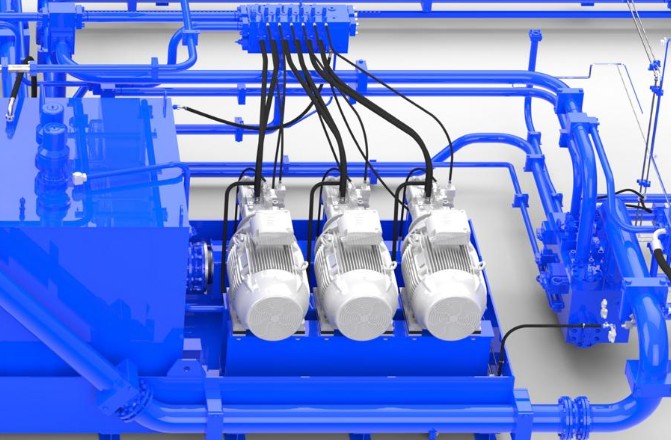
A key feature of modern stationary scrap shears is the sophisticated hydraulic system, which not only provides precise control but also increased efficiency. Oberländer's machines use an innovative hydraulic system that is equipped with power-controlled double pumps that produce minimal delivery volumes when idling. This reduces energy consumption and helps reduce operating costs. In addition, the hydraulic control enables faster pressing and shearing cycles, which significantly increases the processing performance of the machine.
Hydraulic advantages:

The stationary scrap shears from Oberländer are equipped with monitored, automatic oil and grease lubrication, which continuously supplies all moving parts of the machine with lubricants. This reduces wear and ensures smooth operation for many years. Central lubrication makes the machines particularly easy to maintain and minimizes downtime as no manual lubrication is necessary.
Technical advantages:

One of the most outstanding features of Oberländer's stationary scrap shears is the powerful side compactor, which was specially developed to efficiently compact even large volumes of scrap. This compactor ensures that the scrap is optimally compacted even before cutting, further increasing the efficiency of scrap processing. The mechanically machined press box and the guidance via a constant-speed shaft guarantee even force distribution on the scrap and prevent material jamming.
An additional pre-filling trough not only allows the scrap to be assessed and distributed efficiently over the entire length of the press box, but also increases the productivity of the scrap shear by allowing reloading during the shearing process.
Advantages of the Side Compactor:

Oberländer's stationary scrap shears have a high level of automation to reduce operating costs and increase availability. In order to ensure occupational safety and minimize wear on the scissors, operation and monitoring of large shears is mandatory.
The operating personnel play the crucial role. Finding and retaining experienced employees is a question of working conditions. A simple, user-friendly working environment increases the productivity of the system and reduces the demands on operating personnel.
Examples of ease of use are::

The possible uses of stationary scrap shears are extremely diverse. These machines play a central role in scrap recycling and metal recycling. Stationary scrap cutters are indispensable, particularly in recycling plants, scrap recycling companies and the construction industry.
Typical areas of application:

The use of stationary scrap shears brings numerous economic advantages. With high processing performance and low maintenance, companies can reduce operating costs while increasing productivity. Stationary scrap shears make it possible to process large quantities of scrap material in a short period of time, resulting in greater profitability.
Economic benefits:

In addition to the economic advantages, stationary scrap shears also play an important role in environmental protection. By processing scrap efficiently, these machines help reduce waste and conserve natural resources. Thanks to the scrap shears, recycling companies can recycle large quantities of metals, reducing the need for new raw materials and thus making a positive contribution to the environment.
Ecological benefits:
Stationary scrap shears are large machines used in scrap processing to compact and cut large quantities of scrap material to fit into furnaces.
Stationary scrap shears are suitable for processing structural steel, rebar, heavy mixed scrap and other metals.
The machines are characterized by their robust construction, energy-efficient hydraulic systems and minimal maintenance costs.
Thanks to the heavy welded construction, high-quality components and the long-lasting, precise column guidance, Oberländer scrap shears have a very long service life and require minimal maintenance. Systems from the 1970s are still in operation today.
Yes, stationary scrap shears are ideal for use in recycling plants where large quantities of scrap metal need to be processed.
Scrap shears are designed according to, among other things, the type of scrap, the amount of scrap to be sheared per hour, the maximum edge length of the cut scrap and the local environmental conditions. We are happy to help you choose the right scrap shears for your needs.
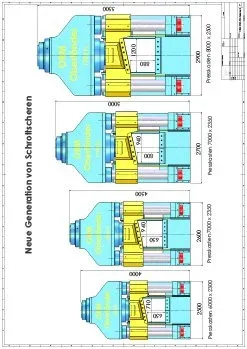
The Oberländer scrap shears offer a wide selection of models that are tailored to the individual requirements of scrap processing. From the PS 700 to the PS 1700, these machines offer enormous shearing power, long service life and high efficiency. The technical data gives you an overview of the shear force, press box size, cutting width and other factors that determine performance. Whether you’re processing small amounts of scrap or large volumes, our scrap shears deliver precise results in every application. Ideal for recycling plants and industrial scrap recyclers.
| PS 700 | PS 950 | PS 1100 | PS 1400 | PS 1700 | |
|---|---|---|---|---|---|
| Shear force [t] | 700 | 950 | 1.100 | 1.400 | 1.700 |
| Press box lengt [mm] | 6.000 | 7.000 | 7.000 | 8.000 | 8.000 |
| Press box width [mm] | 2.000 | 2.350 | 2.350 | 2.500 | 2.500 |
| Side compactor height [mm] | 600 | 800 | 800 | 800 | 1.000 |
| Shear width [mm] | 710 | 950 | 950 | 1.250 | 1.450 |
| Cycles per min. approx. | 4 - 5 | 3 - 4 | 3 - 4 | 3 - 4 | 3 - 4 |
| Down-holder force [kN] | 170 | 3.350 | 4.180 | 5.560 | 6.870 |
| Lid force [kN] | 1x 2.470 | 2x 1.710 | 2x 1.710 | 4x 1.710 | 4x 2.470 |
| Side compactor force [kN] | 1x 2.470 | 2x 2.470 | 2x 3.360 | 2x 3.360 | 2x 4.840 |
| Pusher force [kN] | 1.250 | 1.250 | 1.250 | 1.710 | 2.470 |
| Shear production [t/hr]* | 15 - 20 | 25 - 35 | 28 - 40 | 32 - 45 | 35 - 50 |
| Main drives [kW] | 2x75 | 3/4x90 | 4/5x90 | 5/6x90 | 6/7/8x90 |
| Total weight [t] | 130 | 220 | 250 | 350 | 450 |
| * depends on scrap type and shear length | |||||
Depending on the manufacturer and the specific application, various types of scrap shears are available on the market; here is a brief overview:
Small hydraulic shears into which material is fed by hand and then cut, i.e. by operating a foot pedal. They are used for processing cables, catalytic converters, wheel rims, and other manually manageable parts.
Attachments for material-handling excavators used to shear through structural beams, typically during demolition work.
Mobile shears featuring a blade slider that moves horizontally along the floor of the press box, the slider, equipped with blades on its upper front edge, shears scrap lying on the floor against front wall fitted counter-blades as it advances, discharging the material through an opening at the front. A pre-compactor moves above the blade carriage, ensuring the scrap is pre-compressed and forced down to the floor level. Scrap is loaded from above.
Lightweight scrap shears that use interlocking lids to compress scrap within an elongated compression box before a feed mechanism moves it into the shear head. There, it is vertically compressed by a down-holder device and sheared by a vertical blade slider (guillotine). Due to their lightweight design, most models are mobile and can be transported on heavy-duty trailers or their own chassis.
Shears that use an inclined loading box and side "flippers" to feed scrap into a shear head positioned relative to the vertical box floor; the shear head then pre-compresses and shears the material.
These are classic, stationary scrap shears that compress heavy scrap using a side-compression unit moving horizontally across the compression box and a folding lid. Once the scrap has been compressed to the shear width and maximum shear height, a pusher moves it into the shear head; there, it undergoes further vertical compression by a down-holder (stamper) before being sheared off by a vertically guided blade slider (guillotine). These shears differ primarily in the design of the blade slider guide, lid, and side-compression unit, as well as the use of a pre-fill hopper. They are the most effective and powerful scrap shears on the market.
In addition to these main types of scrap shears, there are specialized shears adapted for specific types of scrap. Examples include:
Advantages:
Disadvantages:
Advantages:
Disadvantages:
Advantages:
Disadvantages:
Advantages:
Disadvantages:
Advantages:
Disadvantages:
Advantages:
Disadvantages:
The guidance of the blade slide is crucial for the operation of a scrap shear. If the blade gap between the upper and lower blades cannot be precisely adjusted (< 0.5 mm) across the entire shearing width, the scrap will be torn rather than cut, even when high shearing forces are applied. Not only does this render the shearing force ineffective, but it also significantly reduces the shear's productivity, as the hydraulic system is forced to constantly operate at high force levels, thereby limiting speed.
This effect is comparable to cutting paper with scissors: if the pivot is loose, even the sharpest blades are useless.
Basic scrap shears often use welded-on guides that cannot be reconditioned, or at least not uniformly. Adjustment mechanisms are of little use because guide wear is uneven. Wear is usually greater in the actual cutting zone than in the rest of the blade slide's travel path, making parallel adjustment ineffective.
Blade slide guides that do not come into contact with scrap or intruding "shear sand" (fine particles in the feed material) offer the best resistance to wear. This is only the case with column-guided blade sliders.
Lightweight shears dent easily, leading to jams in the compression box during the feeding and side-compression phases, as material gets pushed under the compactors within the dents. The most vulnerable component of a conventional scrap shear is the feed cylinder, as it has the longest stroke and thus extends the piston rod the furthest. If material adheres to the rod or severe wear occurs in the feed area, the piston rod can easily become scored, leading to oil loss and—in the worst-case scenario—bending and shear failure. A feed ram rod is very long, entails long lead times, and—given lengths of 8–10 meters—cannot be shipped by air freight for larger shears.
The more rigid the scrap shear's design, the lower the forces the foundation must absorb. Some shear manufacturers require a massive steel base frame to be cast into the foundation to contain the forces generated during operation; this is an expensive and complex process—a fact manufacturers often omit from their quotations.
Optional equipment can enhance the productivity and availability of the shears. This includes, for example, pre-fill hoppers that allow the next load of scrap to be staged and inspected for contaminants while shearing operations are still underway; this can result in up to 20% higher productivity.
Control cabins are essential—especially for large shears—to ensure safe operation and rapid pre-compression. Operating the shear via a material handler’s remote control may seem cost-effective at first glance, but it ties up both the operator and the machine; the handler must remain stationary to operate the shear and lacks the necessary vantage point to monitor the compression box or pre-fill hopper, identify hazards or contaminants, and control the shearing sequence. Poorly equipped control cabins featuring only a standing console lead to operator fatigue, whereas comfortable control seats ensure attentive operation and a clear view of the process.
The design of the hydraulic system is a major cost factor for scrap shears. A shear's effectiveness depends on the number and type of pumps, pipe cross-sections, cooling capacity, and the configuration of the control valve blocks.
For example:
In addition to shear force, the shear width is a crucial factor when selecting larger scrap shears. The two parameters are interdependent.
A narrower shear width ensures that the edge length of the cut scrap does not become excessive, even with short cut lengths. This is important for producing cupola scrap for foundries, where the maximum edge length must remain below 500 mm to allow for easy charging into smaller furnace openings. For such shears, the shear width typically ranges from 500 to 700 mm; a shear force of less than 800 tonnes is sufficient to cut scrap of this width using the shear slide. Due to the shear width, the throughput capacity of such shears is relatively low.
Larger foundries and steelworks can handle cut scrap with greater edge lengths, allowing for the use of wider shears. Since a scrap shear's productivity depends on its shear width, the width is matched to the shear force. Shears with forces up to approx. 1,000 tonnes are used for widths up to 1 m, while the next size categories—1,250 mm and 1,500 mm—require shear forces of approx. 1,400 tonnes and 1,700 tonnes, respectively. The required shear force also depends on the height of the scrap pre-compacted in the compression box; this height is usually selected in conjunction with the shear width and shear force. Compression box heights range from 600 to 1,200 mm.
When operating a scrap shear, the time required to pre-compress the scrap within the compression box is crucial, as this enables the material to be fed into the shear head.
Depending on the type of scrap, this pre-compression process is usually monitored by an operator, as it directly determines the shear's productivity and rate of wear. The duties of the operator—who, in the case of large shears, is stationed in a control cabin with a view of the compression box—include:
Scrap shears designed for heavy scrap are equipped with a side compactor to break apart structural components; the pressing forces required for this are critical. The selection of side compactor forces depends on the height of the side compactor and the length of the compression box, as well as the design of the box walls and the side compactor's guide system. Basic compression box designs lacking stiffeners or ribbing cannot withstand high pressing forces and are therefore limited to operating with lower side compactor forces. In the past, "flipper-style" side compactors were also used, allowing the compactor to operate in a staggered manner; however, it should be noted that this utilizes only half the pressing force from a given hydraulic cylinder, significantly reducing overall pressing power. Furthermore, the mechanical and hydraulic design of these "flippers" leads to high levels of wear on the side compactor.
In the past, pits were frequently used at the shear discharge point; scrap would fall into these pits, allowing for temporary buffering. The shears were installed at ground level so that the material handler operator retained a clear view of the material being fed into the shear.
This design approach has been abandoned for the following reasons:
A simpler solution is to mount the shear on a raised foundation (approx. 1 m high) and let the scrap slide onto a steel-plated concrete floor. From there, it can be easily picked up by a material handler, and the area can be cleaned at any time.
For shears with higher throughput capacities, a pivoting plate conveyor is a sensible choice; this can be supplemented with a screening system to separate out "shear fines" (small debris) before the material is stockpiled. It is crucial that such a system be robustly constructed; a flawed design could lead not only to system failure but also render the shear itself inoperable. There are also specific design details that only specialists are familiar with.
A distinction can be made between three types of feed material that should not be cut in a scrap shear:
They pose a danger to the shear and the operator:
They impair the operation of the shear:
They cause excessive wear on the blades:
The operating costs of a scrap shear depend heavily on the material being processed. They are primarily determined by wear-related costs; for instance, wear costs for aluminum scrap are only 20% of those for steel scrap when calculated based on throughput in tonnes.
Key factors influencing wear include regular maintenance of the shear, pre-sorting of the feed material, and proper operation.
For conventional mixed scrap, the operating costs of a scrap shear can be estimated as follows:
For larger scrap shears and inhomogeneous material, an operator stationed in a control cabin with a view of the compression box should be employed. While this increases personnel costs at first glance, it ensures better utilization and reduced wear on the shear, as the operator controls and monitors loading and pre-compression processes while preventing the inclusion of contaminants.
For electric drives, energy costs are determined by the installed drive power, which primarily supplies the hydraulic pumps. The average power demand can be estimated at approximately 40–60% of the installed power. For example, an installed power of 400 kW corresponds to a consumption of 160 to 240 kWh per operating hour.
Consumables include lubricating oils, greases, and filter elements; these costs are negligible compared to other expenses.
Maintenance costs include:
Due to the extreme wear and tear to which a scrap shear is subjected from day one, it requires periodic overhauling. The service interval and the necessary work depend on the shear's design and type, the material being processed, and the level of maintenance provided.
Key maintenance and repair tasks include:
Discover the details and advantages of our stationary scrap shears from Oberlaender Recycling Maschinen GmbH. In our brochures you will find technical data, size comparisons and everything you need to know about the powerful machines to find the ideal solution for your scrap processing needs. Download our PDFs now and find out more about the tailor-made solutions for your industry.

📥 Download

📥 Download

📥 Download